1. Growth Habit, Architecture & Stature
Abies nebrodensis is an evergreen, medium-sized tree typically reaching heights between 8 and 15 meters, although exceptional sheltered specimens have attained up to 18 meters. The crown architecture is characterized by a compact, conical pyramidal habit in younger phases, which broadens with age into a flattened, somewhat tabular or dome-shaped crown due to continuous exposure to forceful alpine winds crossing the Tyrrhenian Sea into the Madonie heights.
The trunk is straight and robust, frequently measuring between 40 to 90 cm in diameter at breast height (DBH). Lateral branches are disposed in rigid horizontal whorls, with dense, stiff branchlets bearing an upward-curving curvature at the ends, minimizing snow load fractures during severe Sicilian winter blizzards.
2. Foliage Morphology & Stomatal Distribution
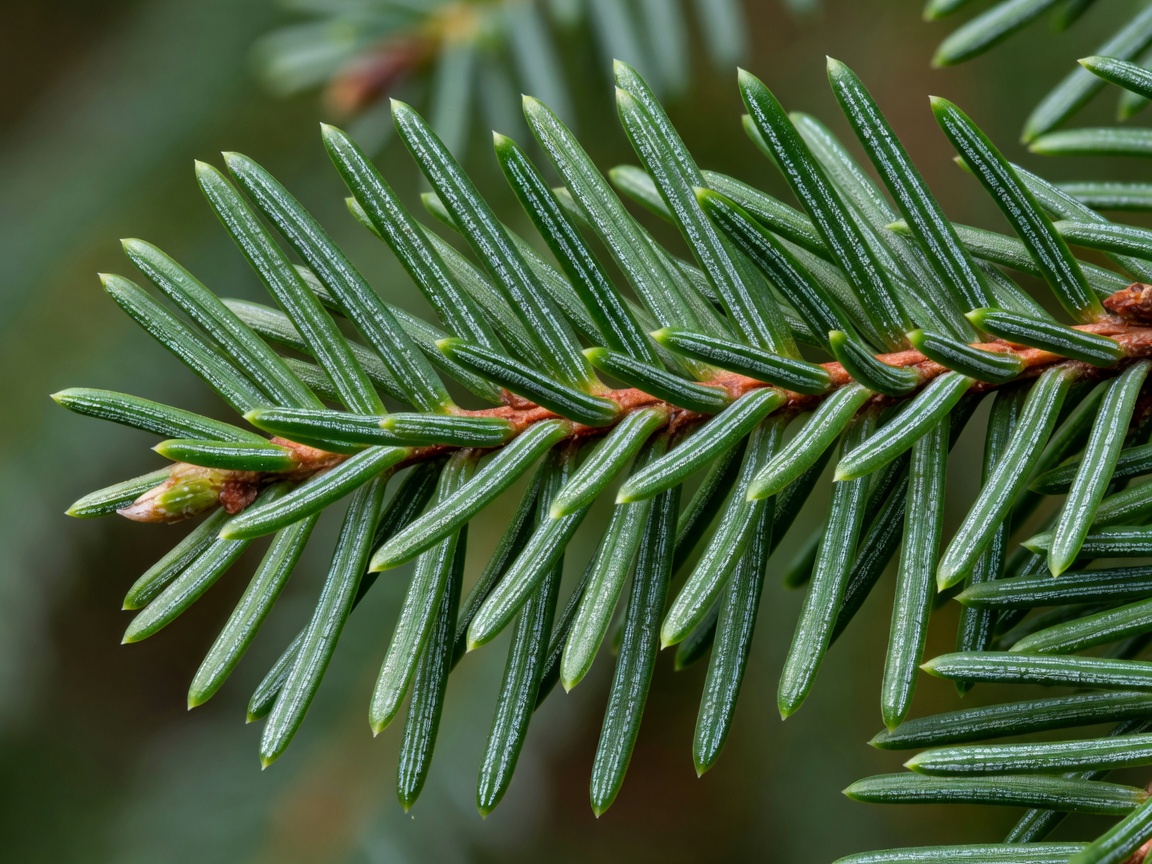
The leaves of the Sicilian fir are linear, flattened needle-like structures, measuring 15 to 20 mm in length and roughly 2 to 2.5 mm in breadth. Unlike the completely two-ranked (pectinate) disposition seen in Abies alba, the needles of Abies nebrodensis are positioned in a denser, radially spreading arrangement on the upper surface of shoot axes, frequently pointing forward in the direction of the apical bud.
The upper adaxial surface is a glossy, deep forest green with a slight longitudinal furrow. The abaxial (lower) surface is characterized by two prominent, bright chalk-white stomatal bands, each containing 8 to 10 rows of stomata. The needle tip is characteristically rounded or slightly notched (emarginate), lacking the sharp pungent tip of Abies cephalonica.
3. Reproductive Biology: Seed & Pollen Strobili
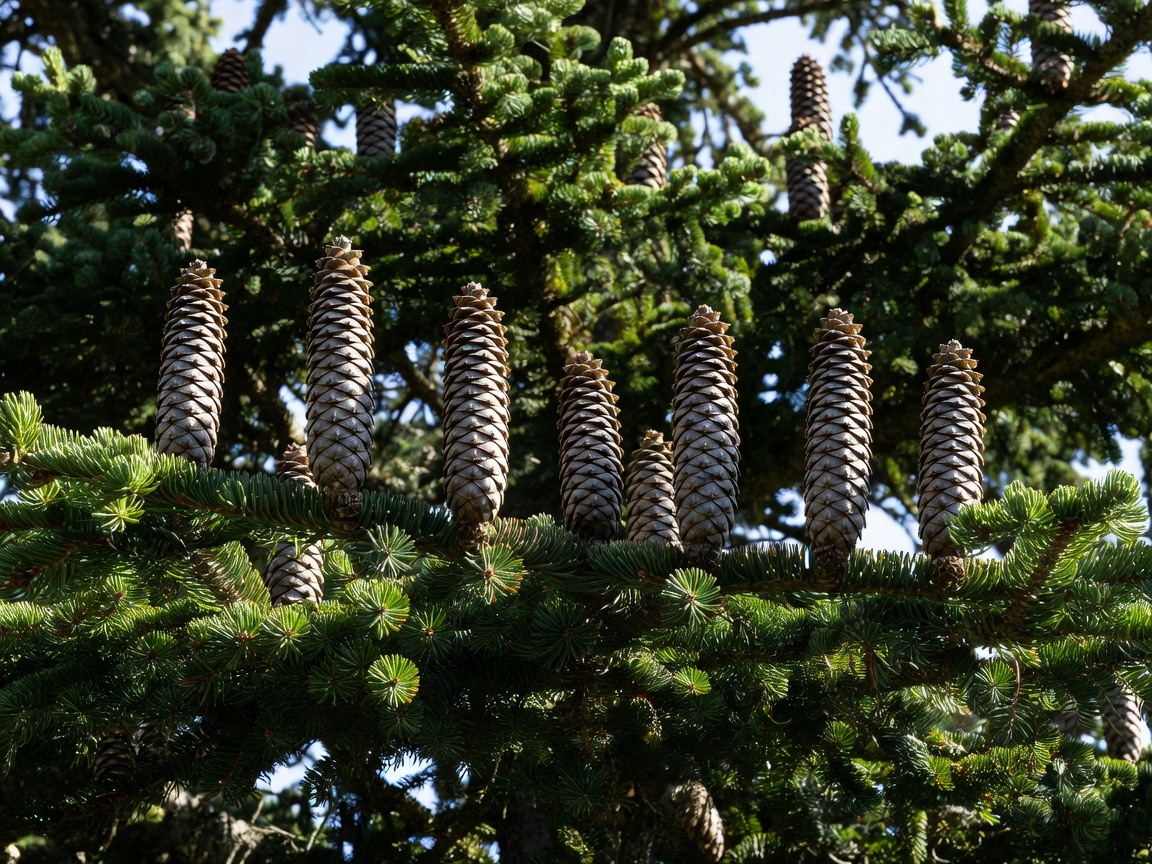
As with all members of the genus Abies, the seed cones are held strictly upright on the uppermost branches of the canopy, never pendant. The female seed cones are cylindrical or cylindrical-ellipsoid, measuring 7 to 10 cm in length and 3 to 4 cm in width. In immature phases, they exhibit an attractive greenish-yellow hue with purplish highlights, ripening in late September to a rich reddish-brown.
A defining taxonomic marker is the shape and protrusion of the bract scales: the bract scales in Abies nebrodensis distinctly exceed the ovuliferous cone scales, terminating in a broad, reflexed (bent downward) triangular point. Upon maturation, the cone scales and bracts disintegrate entirely on the branch, leaving behind an erect, bare central cone axis (rachis) that persists throughout winter.
4. Bark Architecture & Rhytidome Development
On juvenile trees, the bark is smooth, silver-grey to ash-toned, and interspersed with numerous superficial resin blisters containing clear, aromatic oleoresins. As the trunk expands beyond 25–30 years, the periderm thickens into a deeply fissured, greyish-brown rhytidome subdivided into small, quadrangular or rectangular scaly plates. This thick, corky bark provides crucial thermal insulation against seasonal mountain forest fires and sudden freezing episodes during Mediterranean cold fronts.
5. Internal Histology & Resin Secretory Canals
Transverse anatomical sections of mature needles reveal two marginal (sub-epidermal) resin ducts positioned close to the lower epidermis, rather than median canals embedded deep in the mesophyll. This histological characteristic aligns Abies nebrodensis phylogenetically with the ancient circum-Mediterranean clade rather than northern boreo-alpine species. Pollen grains are large, bisaccate (bearing two air bladders), optimized for wind dispersion across turbulent mountain drafts during the peak May flowering period.